Sidon: What Happened to Canaan’s Firstborn?
Following Sidon’s Descendants from Genesis to the Roman Era
Song by Samuel Stennett recorded by Alfred G. Karnes
I am Bound for the Promised Land
And cast a wishful eye
To Canaan's fair and happy land
Where my possessions lie
I'm bound for the promised land
I'm bound for the promised land
Oh, who will come and go with me?
I'm bound for the promised land
According to Hymnary.org’s indexed results there are more than a thousand hymns containing the word Canaan. We sing about Canaan. We talk about Canaan. But what does that word mean?
What Does “Canaan” Mean?
The first time Canaan appears in Scripture, Canaan isn’t a land at all. He’s a man.
The exact meaning of the name Canaan is uncertain. The Hebrew name is Kenaʿan, and some have connected it with a Hebrew root carrying the idea of being low, humbled, or brought into subjection. That possibility is especially interesting considering the prophecy Noah would later pronounce concerning Canaan: “Canaan shall be his servant.”
What the Bible makes much clearer is what the name Canaan came to represent. Canaan was first the name of a man, then the name associated with his descendants—the Canaanites—and eventually the land in which many of those descendants lived.
So before Canaan was the Promised Land sung about in our hymns, Canaan was a person. To understand the land and its people, we need to begin with the man.
Canaan: Noah’s Grandson
The very first time we see the word Canaan in the Bible is in Genesis 9:18 where we learn that Canaan is the grandson of Noah through Noah’s son Ham. In this same chapter in verses 22-25 we read of an incident where Ham sees his father’s nakedness and when Noah realizes what has happened, he pronounces a prophetic curse on Ham’s son Canaan. The curse becomes even more specific in verses 26 and 27:
Here we have learned that the word Canaan refers to a person. He is Noah’s grandson through the lineage of Ham. And while the circumstances around seeing Noah’s nakedness are mysterious and have brought about much discussion and debate, the result is that Canaan was providentially cursed to be a servant to Shem.
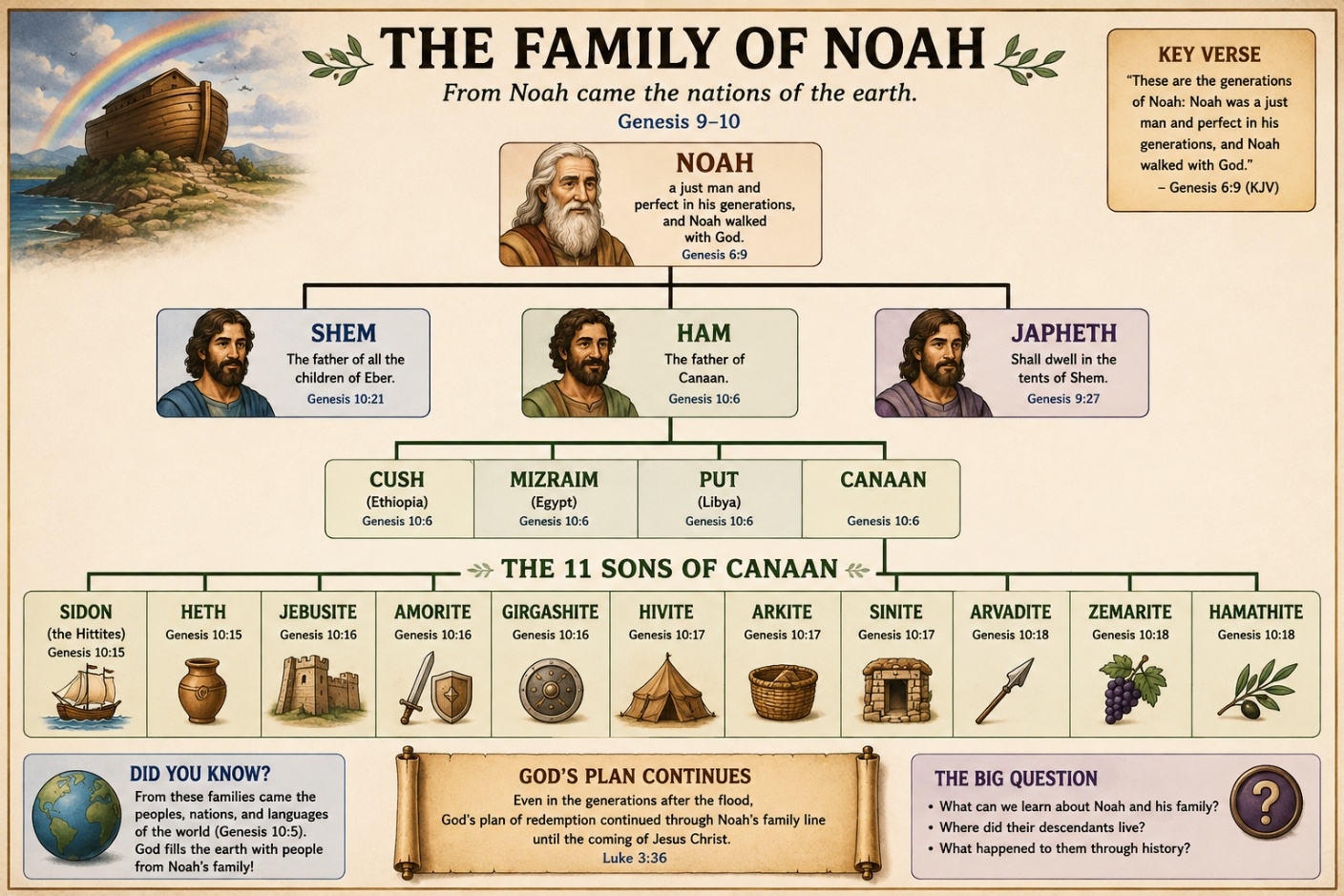
The Sons of Canaan
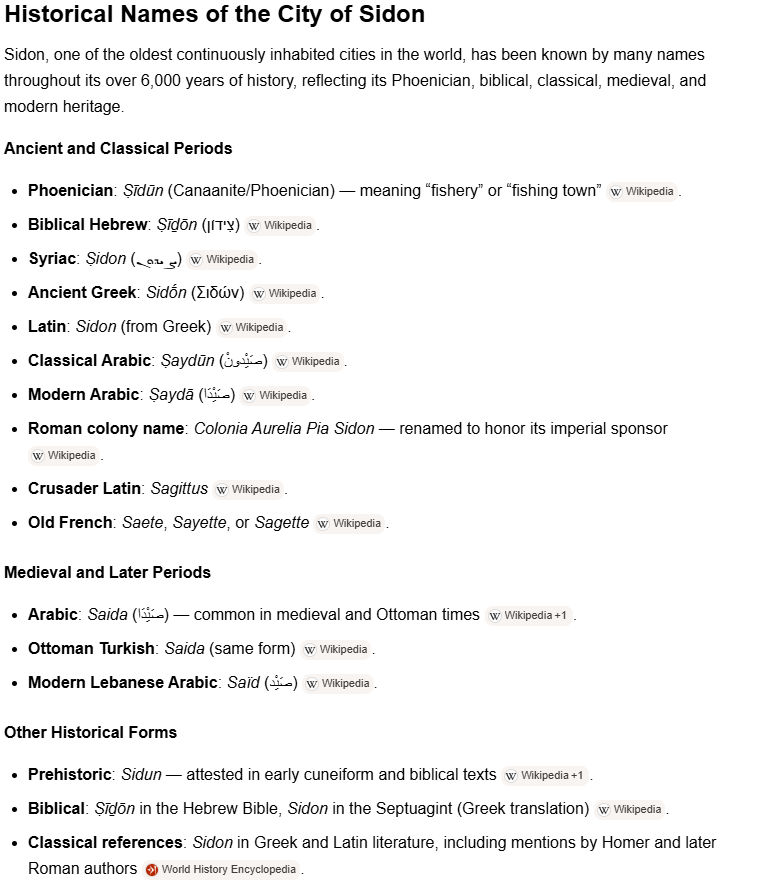
Scripture does not tell us how the curse affected Canaan personally. He goes on to have 11 sons. Not only were his descendants many, but they were of great renown. Out of the 11 sons, 5 of them, possibly 6, and their descendants were well known in the Bible. Today I am going to just talk about one of those sons, Sidon, also known as Zidon. Throughout this post Sidon and Zidon will both be used extensively and interchangeably.
Sidon: Canaan’s Firstborn
We can hypothesize that Canaan and his children left the land of Shinar, Babel, right after God confounded their languages. They would have traveled north through Mesopotamia and then west. I can almost see Sidon and his 10 brothers and their children sadly packing up their belongings, hugging friends goodbye that they can no longer communicate with, and traveling together to find a new home. Who knows, they may have even paraded past Noah, their grandfather, and even Ham saying goodbye in droves. Not all of Ham's family left Shinar but Canaan’s did.
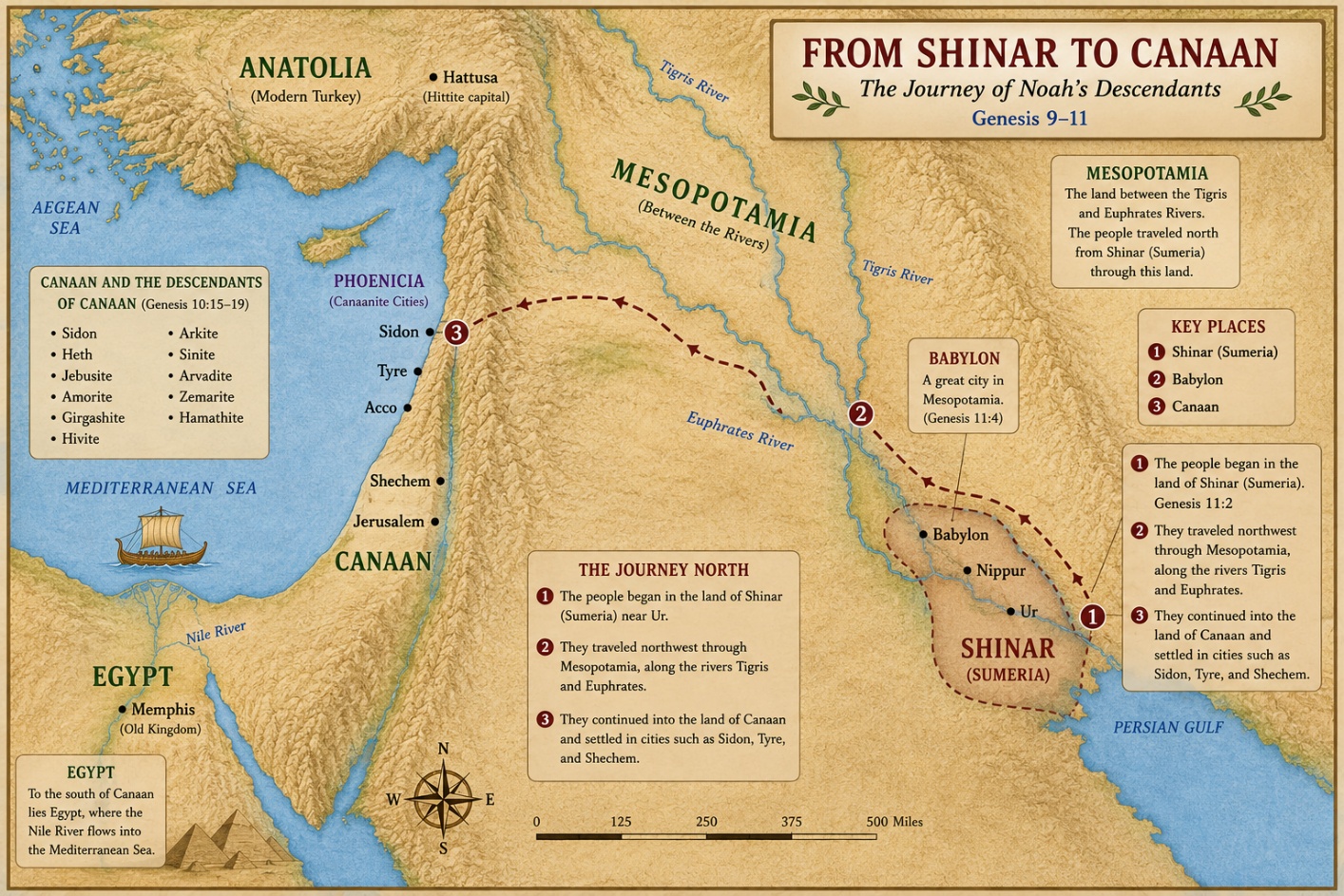
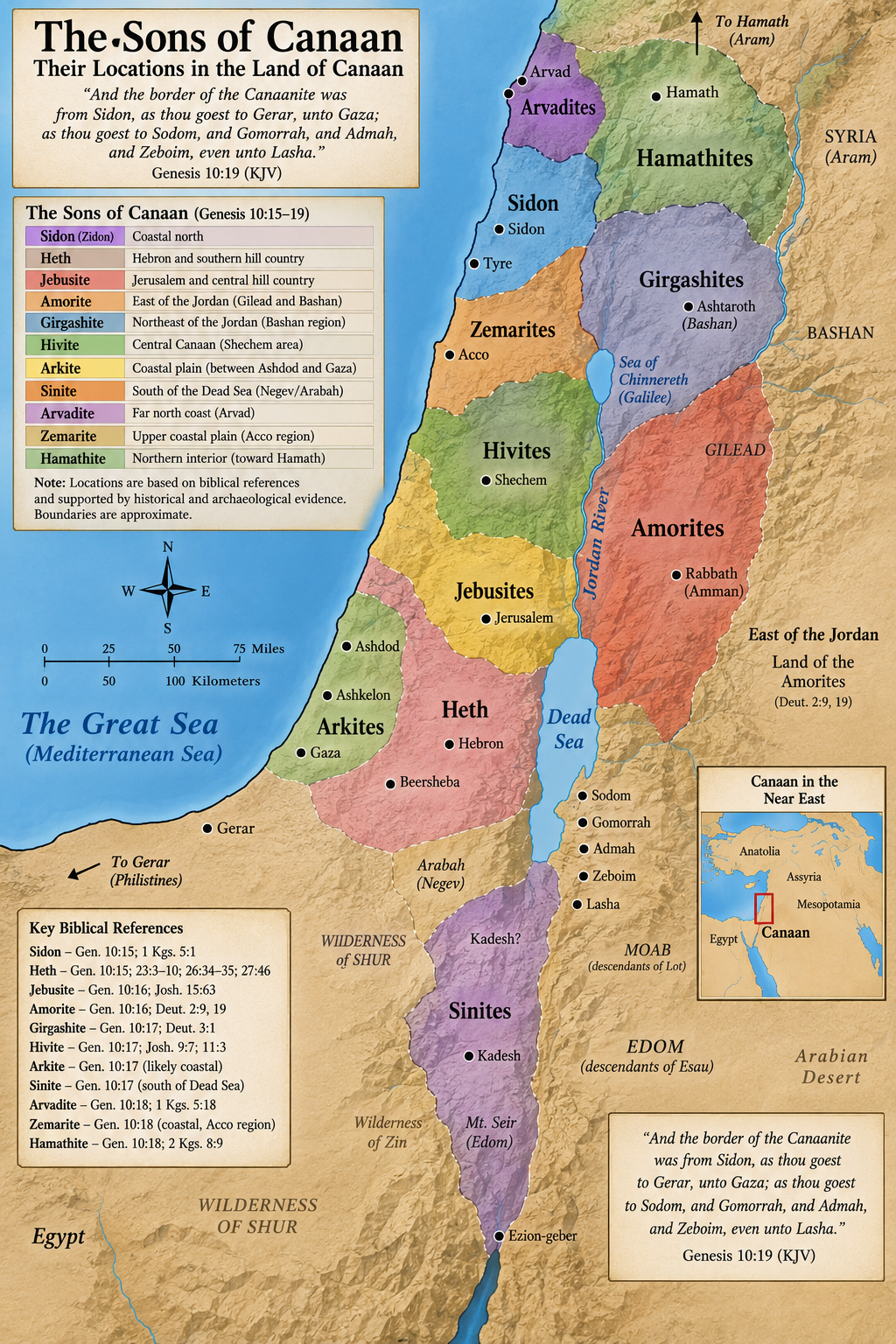
From a Man to a City and a People
Once Canaan’s family began settling the land, they traveled to some of them and began naming the areas of the land after themselves. For instance, Canaan’s firstborn, Sidon gave his name to the city and people known as Sidon. It became his land, and all of his descendants lived around him.
Sidon and the Promised Land
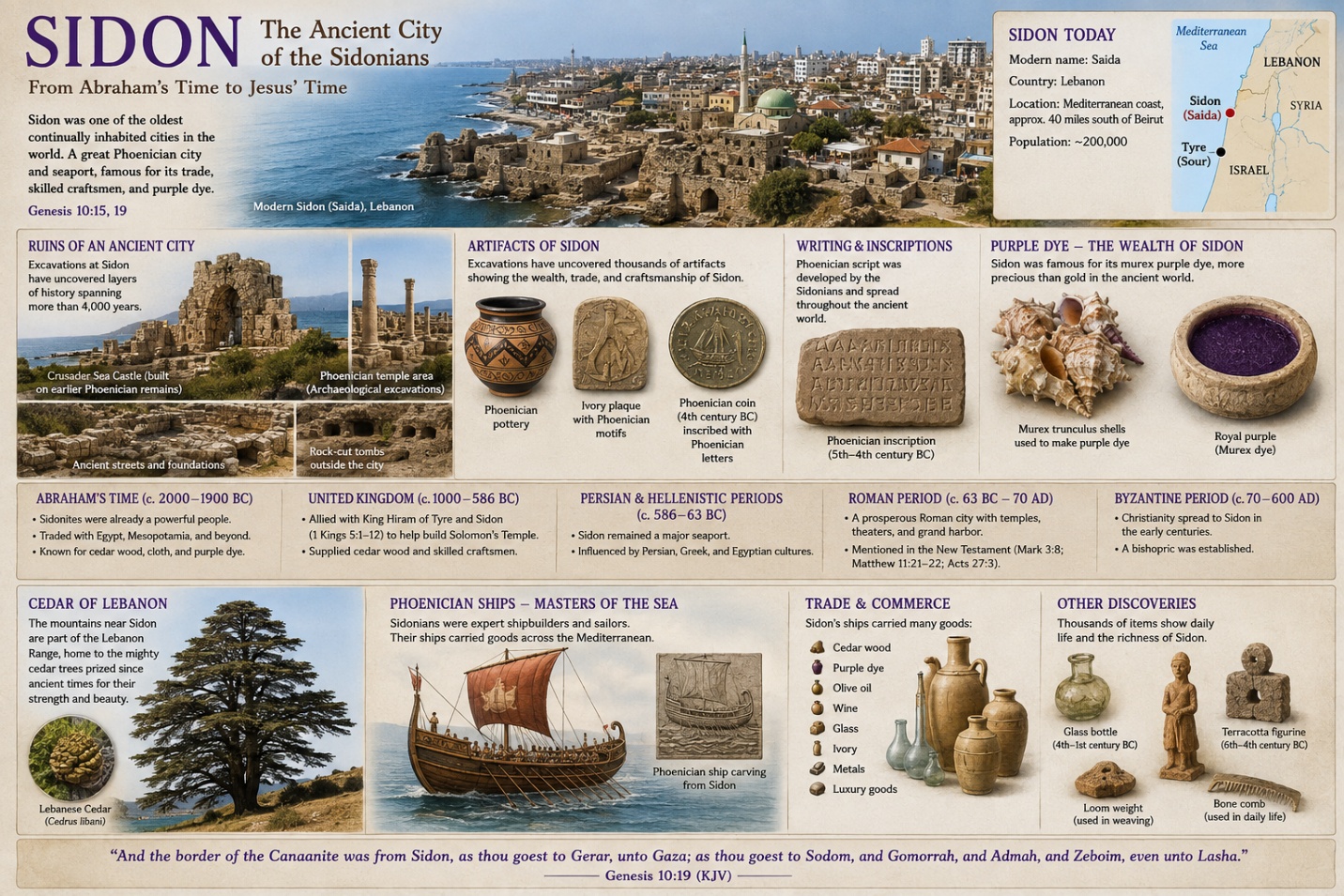
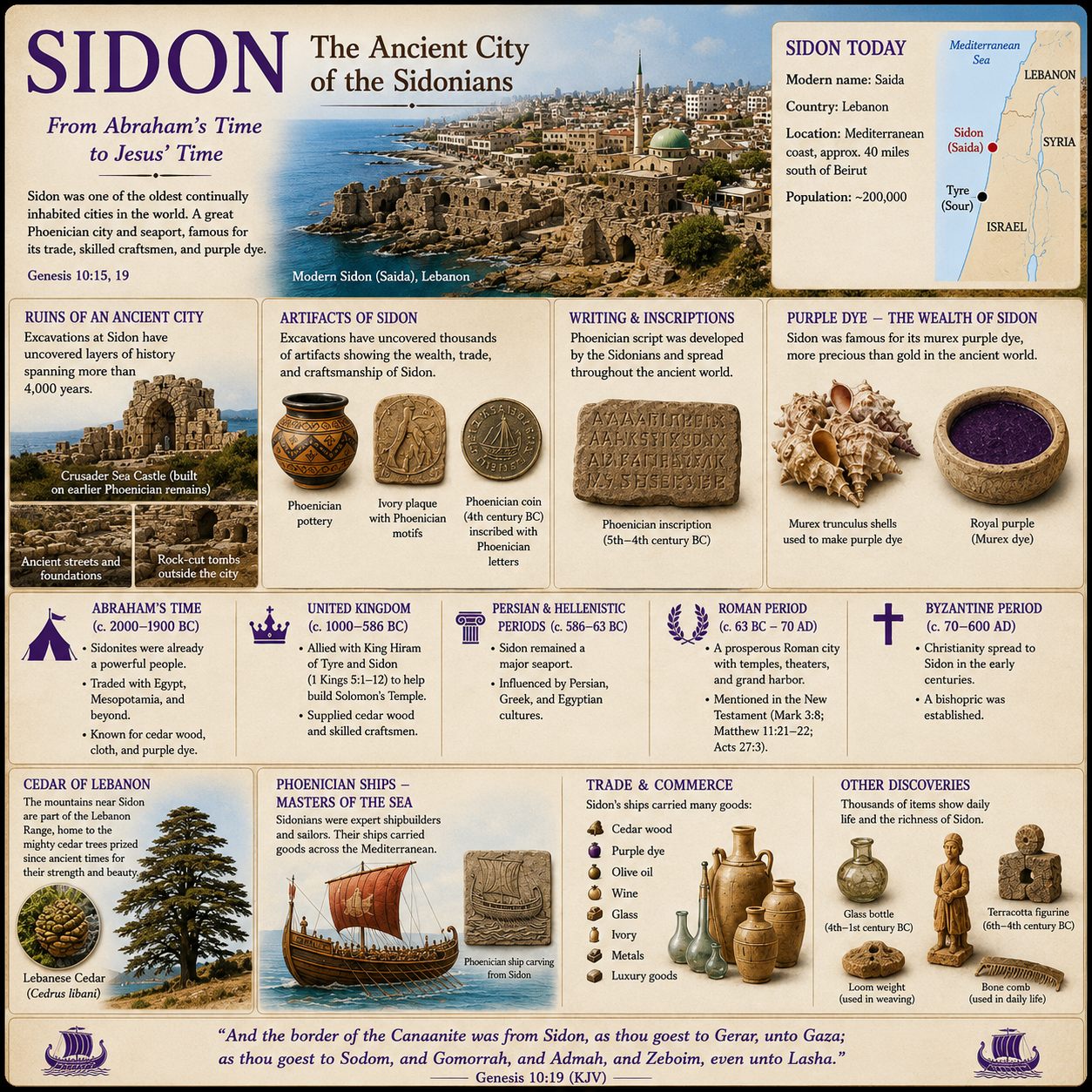
Sidon settled along the Mediterranean Sea. Long before the people of this region would become known to the Greeks as Phoenicians, the cities along this coast were already involved in maritime trade. Archaeological evidence shows that during the Early Bronze Age large vessels were anchoring offshore at Sidon, and Sidon participated in long-distance trade networks connecting the coast with places such as Egypt, Cyprus, and Crete. This trade became increasingly important during the Bronze Age as metals such as copper and tin—needed together to make bronze—had to be obtained and transported over great distances. By the Middle Bronze Age, Sidon was importing copper from Cyprus. So by the general time period in which Abram entered Canaan, Sidon was already part of a developing world of Mediterranean trade.
In Genesis 12:1-7, God promised to give all the land that Abram passed through to his descendants. God continued in that promise though it had not come to pass yet, and Canaan’s land became the promised land. When Jacob was about ready to die while sojourning with his family in the land of Egypt, he blessed his children and told where they would live in the promised land. In Genesis 49:13 we learn that Zebulun would get the land up to Zidon.
This did not happen for a very long time following this prophecy, but I am sure the excitement of one day owning land near the Mediterranean Sea was exciting to think about. The next time we read about Sidon in the Bible is when Joshua is leading the Israelites in conquest of the land.
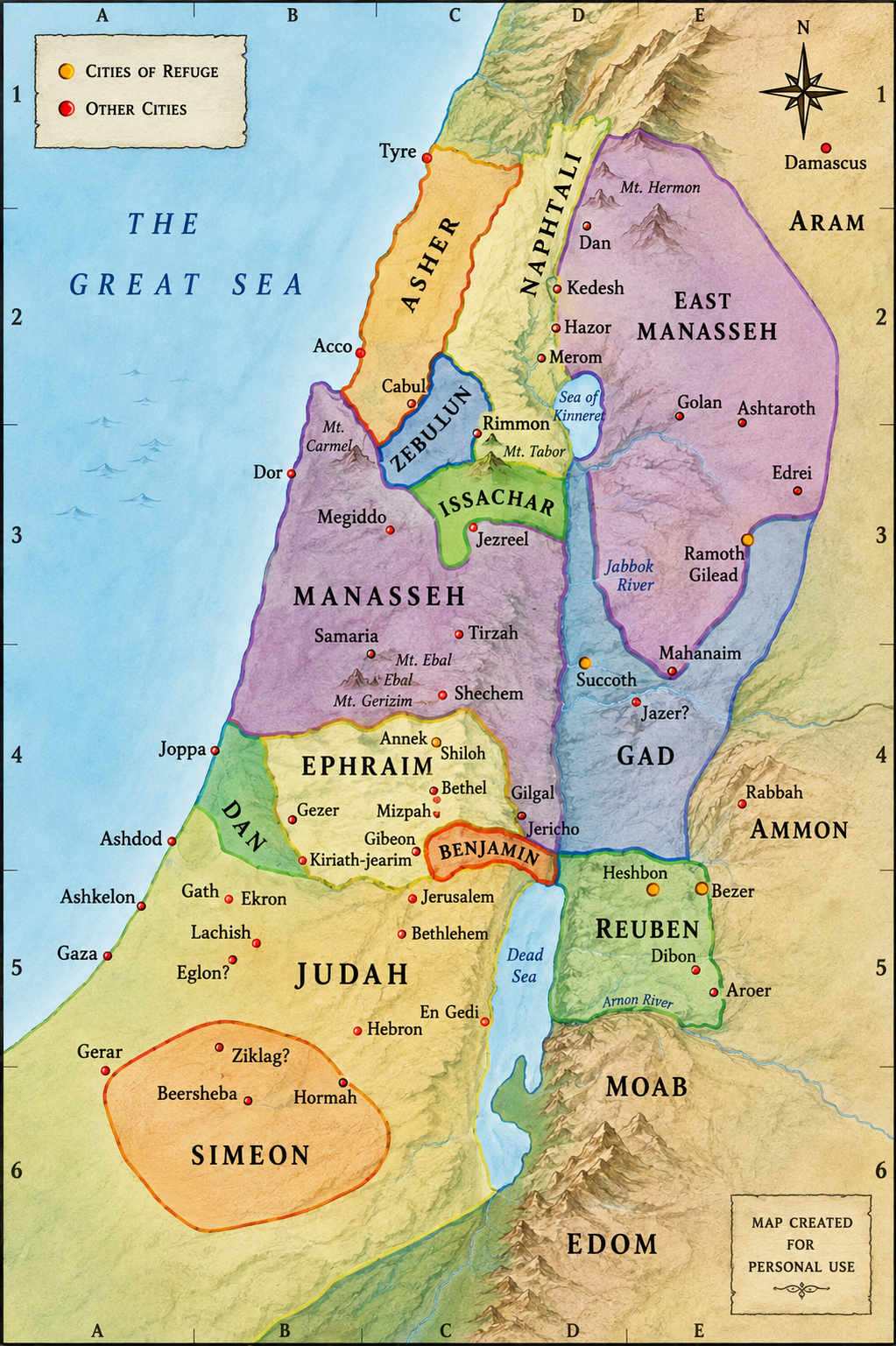
It is not clear if Zebulun inherited any of the coastline of the Mediterranean Sea. Some maps that I have show an area under the land that Sidon claimed as being Zebulun’s, while others show Zebulun as being landlocked and Manasseh having that portion of the land along the Mediterranean under the Phoenician land. Joshua gave the Mediterranean border of the Phoenicians, Sidonians, to Asher's family, Joshua 19:24-31.
Map below showing Zebulun landlocked found in personal archives; original source lost. The map has been resketched for personal use.
Archaeological research on Bronze Age Sidon
Related archaeological research
The Sidonians Israel Did Not Drive Out
In Judges we read that Asher was unsuccessful in driving out the inhabitants of his land, including the Zidonians, Judges 1:31. But this may have been part of God’s plan all along. This makes me wonder how Noah's prophecy concerning Canaan fits into all of this. Canaan's descendants were to become servants to Shem's descendants. Could the continued presence of Canaan's descendants in the land have played some part in the fulfillment of Noah's prophecy? Abraham was a descendant of Shem, and if Canaan’s family was all kicked out of the land, then they would not be able to serve Shem’s descendants. The problem wasn’t that the Israelites could not kick them all out of the land. The problem was that they allowed their would-be servants to continue in Canaanite idolatry, and the Israelites were eventually swayed to also worship those false gods (Judges 10:6).
Who Were the Sidonians?
Let’s talk a little about the character of the Sidonians. From Judges 10:6 we learn that they worshipped false gods. Earlier, from Genesis 49:13, we learned that they were a haven by the sea and had ships. In Judges 18:28, spies from the tribe of Dan were sent out to look for more land that their people could possess, and they came upon a group of people that, though they were far from the city of Sidon, possessed the mannerisms of the Sidonians. Judges 18:7 says that the mannerisms of the Sidonians that these people possessed were that they were careless, quiet, and secure. They were free people, content, and carefree of worry.
Sidon, the Phoenicians
Before we look into further interactions with the Israelites lets continue to look at who the Sidonians were. The Greeks later called them the Phoenicians. The descendants of Sidon expanded their area as their population grew, and they founded other cities like Tyre. They were a seafaring people who traveled along the whole area of the Mediterranean Sea as well as into the Atlantic Ocean. They brought a common language and trade to the areas surrounding the Mediterranean Sea. Isaiah in 23:2 tells how Sidon brought much-needed supplies to the inhabitants of islands to replenish their supplies.
Solomon and the Sidonians
During the time of Solomon, King of Israel, Sidon and Tyre were not in subjection to King Solomon, 1 Kings 5. Instead, Hiram I was the King of Tyre, ruling over his own kingdom. According to worldhistory.org Sidon was ruled by a succession of kings all their own. During Hiram I's reign of Tyre, Ittobaal and then Abibaal ruled as kings of Sidon.
This raises a question for which I have not yet found a clear answer. Did the tribe of Asher still live in the Sidon and Tyre land, and who were they subject to? Were they ruled by both these Canaanite kings as well as Solomon, or did they live in the land of the Canaanite kings and stay in subject to Solomon only? According to 2 Samuel 24, Israelites did still live among the Zidonians in Sidon and Tyre, for Joab was sent by King David to count them among his mighty men. To date, I have not read any indication that they would not be living in the area they were originally assigned to by Joshua. Phoenician Government timeline.
King Solomon was in good standing with the Zidonians and even married the daughters of the kings. 1 Kings 11:1-8 tells us that Solomon had many wives and that the Zidonians were among them. When Solomon was old, he let his foreign wives turn his heart away from the one true God, and he began worshiping his wives' false gods. Here we learn that the Zidonians worshiped the false goddess Ashtoreth.
Jezebel: A Princess of Sidon
After the kingdom of Israel split, there came a king in the northern kingdom who married a princess from Zidon. That princess was Jezebel. Ethbaal was her father and king of Sidon at the time 1 Kings 16:29-33. King Ahab let Jezebel completely sway his heart to bring in Baal worship while he also continued worshiping a golden calf built by King Jeroboam.
Elijah Goes to Sidon
Elijah, the well-known prophet of the northern kingdom of Israel, was told by God to go to a city in Sidon named Zarephath, to be cared for by the widow woman during a great famine (1 Kings 17:9-10). Jesus later called the city Sarepta (Luke 4:26).
Interestingly, neither account tells us whether this widow was a descendant of Canaan or of Israel. Jesus points out that “many widows were in Israel in the days of Elias… but unto none of them was Elias sent, save (or except) unto Sarepta a city of Sidon.” Because Jesus contrasts her with the widows of Israel, she is commonly assumed to have been Gentile. However, the text never actually calls her a Gentile, Canaanite, or Sidonian by descent.
Could she have been an Israelite living in the land of Sidon? We know that the tribe of Asher had lived among the Canaanites in this northern coastal region rather than driving them out (Judges 1:31–32). According to Obadiah 1:20, Zarephath may have been one of the furthest cities in the north belonging to Israel in the region of Sidon. This makes me wonder if she could have been descended from Asher and living among the Sidonians.
There is one other detail that makes me wonder. After Elijah was used by God to bring her son back to life, she said, “Now by this I know that thou art a man of God, and that the word of the LORD in thy mouth is truth” (1 Kings 17:24). Was she a Sidonian who came to recognize the true God through Elijah, or was she an Israelite living far from the heart of Israel and surrounded by pagan culture? Scripture does not tell us.
What Scripture does tell us is that during one of Israel’s darkest times, God sent His prophet into the land of Sidon, and there God provided for Elijah through a widow in Zarephath.
The Prophets Speak Against Tyre and Sidon
Jeremiah spoke a couple of times about the inhabitants of Sidon. He sent messages to Sidon by God’s direction in chapter 27 to tell the people of Sidon that He was raising up Nebuchadnezzar, king of Babylon, and if they wanted to live and stay in their land, they would need to serve him. In chapter 25 Jeremiah spoke of a judgment by the sword and a whirlwind that would affect all the inhabitants in the land of Israel, including Sidon. According to verse 12, that judgment would come at the end of the seventy years of captivity in Babylon that the Israelites would have to endure.
During the time of Ezra and Nehemiah, money was sent to Sidon and Tyre for much-needed lumber made from the Cedar trees of Lebanon, which was part of their land and natural resources Ezra 3:7. Solomon had done the same when he was building the temple of God, and this remnant of Israel chose to do the same to rebuild the temple that had been destroyed by the Babylonians.
Ezekiel chapters 27 and 28 are interesting reads. They speak of the beauty, character, and judgments of Tyre and Sidon. Tyre is referred to as Tyrus here. Since the inhabitants of Tyre were descended from Sidon and everything about their cultures was the same except that they eventually had their own separate kings, it is assumed that what is said of Tyre could also be said of Sidon and vise versa. The prophet Zechariah mentions the wealth and destruction of Tyrus and the wisdom of Sidona and Tyrus, Zechariah 9.
The prophet Joel mentions Tyre and Sidon, telling of the grief and sorrow that the sons of Canaan did to the people of Israel while most of them were in Babylonian captivity and upon their return from that captivity. Selling the boys and girls as slaves, and taking Israel’s silver and gold and using it in the temples of the false gods. God asks in Joel 3:4 if these people of Canaan will be able to recompense, meaning to compensate or make amends for the deeds they have done. Joel goes on to tell about the judgment that will one day occur in the valley of Jehoshaphat, which could be the valley of Kidron in Jerusalem.
Jesus Goes to the Land of Sidon
Jesus spoke of Sidon and Tyre as he began to reprimand cities that were trying to earn their salvation through works and not repenting of their sins despite witnessing His mighty works, Matthew 11:20-24, Luke 10:13-14. Later, Jesus goes to the coast of Tyre and Sidon along the Mediterranean Sea, Matthew 15:21-28 and Mark 7:24-30. While he makes it clear that he is there to witness to the children of Israel, he has a very interesting encounter with one of the descendants of Sidon.
A Canaanite Woman Meets the Son of David
We began this study in Genesis with Canaan and his firstborn son Sidon. Now, generations later, Jesus has entered the coasts of Tyre and Sidon, and Matthew specifically introduces a woman of Canaan. The Bible specifically distinguishes that this woman was from the lineage of Canaan (Syrophoenician and Greek), not the lineage of Shem, while showing Jesus’ intention to reach the children of Israel while he is on earth, and his compassion for even a people cursed for centuries.
Throughout Jesus’ ministry, people from the land of Sidon would come to hear his words and to be healed from their diseases (Luke 6:17, Mark 3:8).
Sidon in the Book of Acts
An interesting thing happens in Acts 12:20-25 concerning the people of Sidon. They have made friends with King Herod’s chamberlain, and they came to the king seeking peace. Herod tells the people to come back on a set day, and he will declare his intentions. That day comes, Herod is decked out in his finest apparel. He speaks an oration unto them, and they give a shout declaring Herod to be a god and not a man. Herod does nothing to deny himself as a god nor to give God glory, so the true God kills him right then and there, eaten of worms.
The last mention of Sidon that I am aware of is found in Acts 27 when Paul, as a prisoner, was allowed to visit a friend's house to refresh himself before boarding a ship to sail to Italy.
What Became of Canaan’s Firstborn?
- Father: Canaan
- Grandfather: Ham
- Great-grandfather: Noah
- Named: Genesis 10:15
- Location: Mediterranean coast
- People: Sidonians/Zidonians; later associated with the Phoenicians
- Known for: ships, maritime trade, craftsmanship, cedar, and commerce
- Religion: associated biblically with Baal and Ashtoreth
- Famous biblical descendant/royal connection: Jezebel
- New Testament connection: Jesus ministered in the region; Paul stopped at Sidon
Sidon's name did not disappear with the man. It became associated with a city, a people, a maritime culture, and eventually the Phoenician world. His descendants interacted with Israel for centuries—from the conquest of Canaan, through the kings and prophets, and into the New Testament world. By the Roman era, the ancient city bearing Sidon's name was still standing, and Paul himself stopped there on his journey to Rome. The next time we encounter Sidon, Zidon, the Zidonians, Tyre and Sidon, Jezebel, or the Syrophoenician woman in Scripture, they are no longer disconnected names. We know where their story began: “And Canaan begat Sidon his firstborn.”
Pictures and maps on this post were created using AI technology unless otherwise referenced.
By Ragina Fritz with Words of Encouragement Ministry
Love God, love God’s Word, and love life.
Enjoyed this study? Share it or save it for later.